
Desmond Doss, a conscientious objector during World War II, stands as a symbol of bravery and selflessness. Despite refusing to carry a weapon, he served as a medic and displayed extraordinary courage on the battlefield, particularly during the Battle of Okinawa. His unwavering commitment to saving lives, even under intense enemy fire, has made his story one of the most inspiring tales of heroism in American history.
So, how many lives did this remarkable individual save? Doss’s actions led to the rescue of dozens of soldiers, showcasing his dedication to his fellow troops. His legacy not only highlights the impact of one man’s conviction but also serves as a reminder of the power of compassion in the face of adversity. Exploring the extent of Doss’s heroism reveals the profound influence he had on those around him.
Overview of Desmond Doss
Desmond Doss served as a United States Army medic during World War II, known for his unwavering commitment to his principles as a conscientious objector. Despite his refusal to bear arms, he displayed extraordinary bravery in combat, especially during the Battle of Okinawa in 1945. Doss rescued approximately 75 soldiers, risking his life repeatedly to bring wounded comrades to safety.
Doss’s actions exemplified selflessness under fire. Armed only with his faith and medical knowledge, he triaged and treated injured troops amidst intense combat situations. His dedication earned him the Medal of Honor, the highest military award in the United States, presented by President Harry S. Truman in 1945.
Doss’s legacy continues to inspire. His story reflects the power of conviction, demonstrating that courage can manifest in various forms beyond the battlefield. His influence on fellow soldiers underscored the importance of compassion, even in the face of adversity.
Wartime Context
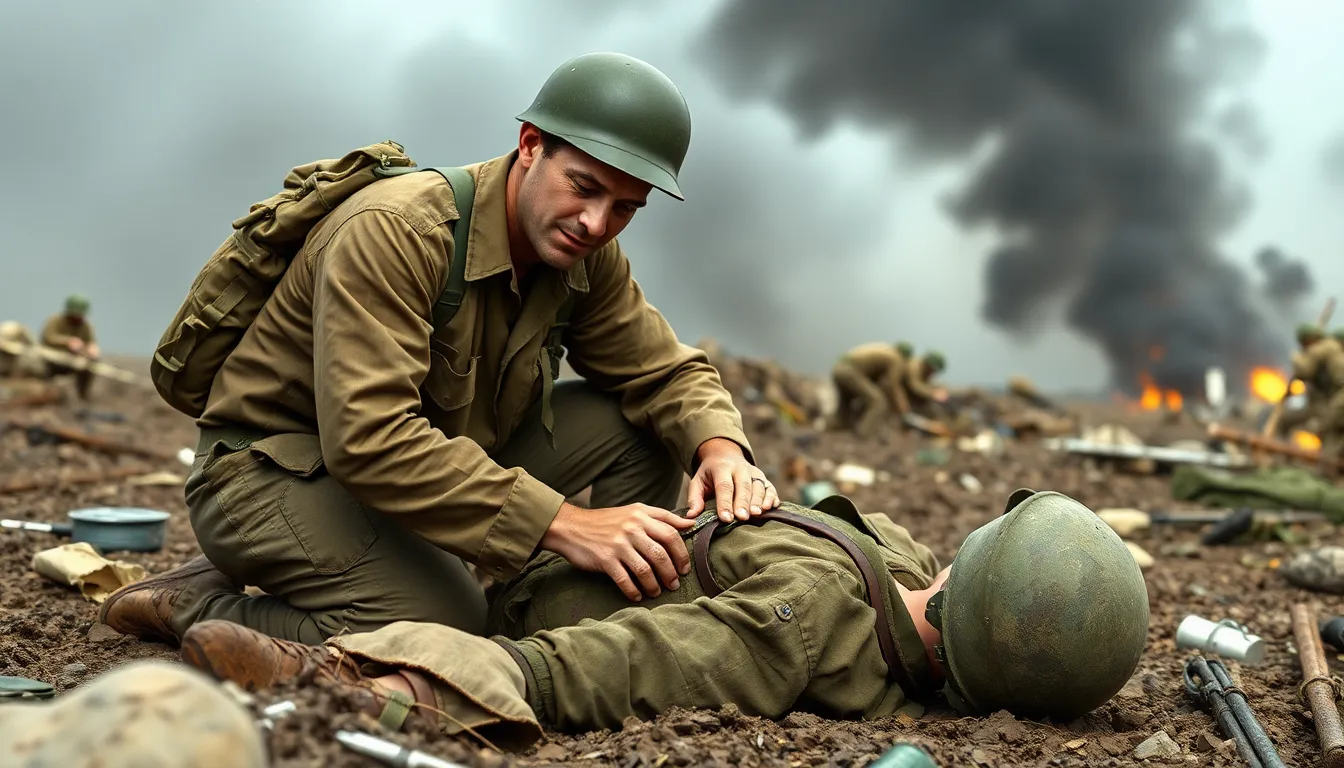
Doss’s story unfolds against the backdrop of World War II, a conflict characterized by widespread violence and moral dilemmas. His experiences exemplify the complexities of war, highlighting how individual choices intertwine with larger historical events.
The Battle of Okinawa
The Battle of Okinawa, fought from April to June 1945, represents one of the bloodiest conflicts in the Pacific theater. Approximately 100,000 soldiers from various nations faced brutal conditions as they fought for control over the strategically vital island. The U.S. aimed to reduce Japan’s ability to wage war by capturing Okinawa, which acted as a staging area for further operations. Casualties soared, with estimates of over 12,500 U.S. troops killed and more than 50,000 wounded. This chaotic environment set the stage for Doss’s remarkable acts of bravery.
Doss’s Role as a Medic
Doss served as a medic within the 77th Infantry Division during the Battle of Okinawa, where he faced intense combat and danger. Without a weapon, he relied solely on his medical skills and unwavering faith to assist the wounded. He established a reputation for courage, often under fire, moving through the battlefield to provide aid. Doss’s ability to triage patients efficiently ensured that critical medical support reached soldiers in dire need. His tireless efforts culminated in the rescue of around 75 troops, reflecting his dedication to saving lives, regardless of military affiliation.
The Impact of Doss’s Actions
Desmond Doss’s actions during World War II left a significant and lasting impact on both his fellow soldiers and the broader military community. His extraordinary courage not only saved lives but also inspired those around him to embody similar values of compassion and bravery.
Number of Lives Saved
Doss rescued approximately 75 soldiers during the Battle of Okinawa. His ability to navigate dangerous terrain while under heavy enemy fire exemplified his selflessness. With each rescue, he demonstrated unwavering resolve, often returning to the battlefield multiple times to save others. This impressive figure underscores the profound effect of his medical training and moral conviction in an environment filled with chaos.
Account of Individual Rescues
Doss’s individual rescues showcased his bravery and resourcefulness. During one incident, he fetched a wounded comrade from a location directly exposed to enemy fire, using only his strength and determination. Other soldiers witnessed Doss carrying injured men to safety on his back, often employing techniques learned through his medical training to stabilize them. His meticulous approach to triaging injuries while prioritizing the most critical situations allowed him to save many lives in the most adverse conditions. Each act of heroism built a legacy that resonated deeply with those he rescued, fostering a sense of hope and resilience amid the devastation.
Recognition and Awards
Desmond Doss received significant recognition for his extraordinary bravery and commitment to saving lives during World War II. His actions led to numerous awards and tributes that honor his legacy.
Medal of Honor
Desmond Doss received the Medal of Honor for his valor during the Battle of Okinawa. President Harry S. Truman presented the award in 1945, acknowledging Doss’s selfless acts in retrieving around 75 wounded soldiers while under fire. The citation highlighted his courage, stating he “demonstrated exceptional gallantry and intrepidity” in saving lives without carrying a weapon. Doss remains one of the few conscientious objectors to earn the Medal of Honor, marking a significant moment in military history.
Other Honors and Tributes
Doss’s contributions have been recognized with several other notable awards and tributes. He received the Bronze Star Medal for his heroism as a medic, which further underscores his dedication. Several military installations and facilities bear his name, including the Desmond Doss Health Clinic in Fort Jackson, South Carolina. Additionally, the United States Congress introduced legislation to honor him with a commemorative stamp, and he has been featured in documentaries and a major motion picture, “Hacksaw Ridge,” further educating the public about his remarkable story. These honors reflect the lasting impact of Doss’s actions on military values and humanitarian efforts.
Doss’s Legacy
Doss’s legacy transcends his battlefield heroics, illustrating the essence of selflessness and compassion in warfare. His actions during the Battle of Okinawa not only saved approximately 75 soldiers but also served as a catalyst for a cultural shift within the military. Doss’s approach to saving lives emphasized the importance of prioritizing humanity over traditional combat roles.
Doss’s influence extends beyond individual rescues. His story represents a broader narrative on the significance of conviction in the face of adversity. Demonstrating extraordinary moral courage, he inspired his fellow soldiers to uphold values of empathy and bravery. For instance, his swift decisions in triaging injuries helped countless servicemen receive necessary care, showcasing the impactful role of medics in combat zones.
In recognition of his contributions, Doss received multiple honors, reinforcing his stature as a symbol of integrity within the armed forces. The Medal of Honor and the Bronze Star Medal highlight his commitment to humanitarian principles during war. Additionally, military establishments, such as the Desmond Doss Health Clinic, commemorate his legacy, reminding future generations of the importance of courage and compassion.
Doss’s life story, portrayed in documentaries and the film “Hacksaw Ridge,” continues to resonate with audiences, educating society about the virtues of compassion in conflict. This portrayal amplifies the understanding of how a steadfast commitment to one’s beliefs can foster hope and resilience within the chaos of war. Each acknowledgment of Doss strengthens the narrative that courageous acts can reshape perspectives on life-saving roles beyond conventional military engagements.
Desmond Doss’s remarkable journey as a medic during World War II stands as a testament to the power of conviction and compassion. By saving approximately 75 soldiers during the Battle of Okinawa, he not only showcased extraordinary bravery but also redefined the role of medics in combat. His legacy continues to inspire individuals and military communities alike, emphasizing the importance of empathy in the face of adversity. Doss’s story serves as a powerful reminder that true courage often lies in selflessness and the commitment to uphold one’s principles, even in the most challenging circumstances. His impact will resonate for generations to come, influencing how humanity is prioritized in the theater of war.


